Recognition & Evaluation

Concussion Signs and Symptoms

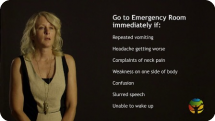
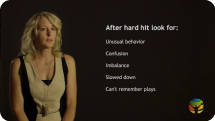
Evaluating and managing concussions starts with the recognition that the athlete has actually suffered a concussion. A concussion should be suspected when an athlete receiving a direct or indirect acceleration forces to the head which causes him to experience any post-concussion signs or symptoms, including but not limited to loss of consciousness (LOC) and either of the forms of post-traumatic amnesia (PTA): anterograde amnesia (reduced ability to form new memories) or retrograde amnesia (partial or total loss of ability to recall events occuring immediately prior to brain injury)(RGA). If any of such symptoms or problems is present, a head injury should be suspected and appropriate management, including monitoring for deterioration, begun.

What Are The Common Signs and Symptoms of Concussion?

The Flash plugin has not been detected. Please click here to download Flash
There are approximately twenty-five signs and symptoms, says Dr. Robert Cantu, coaches, athletic trainers, health care professionals, parents and athletes should look for as indicating an athlete has suffered a concussion.

Grading Sports Concussions After Symptoms Clear Has Value

The Flash plugin has not been detected. Please click here to download Flash
Dr. Robert Cantu says that while there is debate about the importance of grading concussions, he sees value, especially where an athlete has suffered multiple concussions and where the grading is done after the signs and symptoms have cleared.

Concussion Severity Determined By Number, Duration and Degree of Symptoms

The Flash plugin has not been detected. Please click here to download Flash
Duration, number and degree of post-concussion signs and symptoms determine concussion severity, says Dr. Robert Cantu.

What Are The Common Signs and Symptoms of Concussion?

The Flash plugin has not been detected. Please click here to download Flash
There are approximately twenty-five signs and symptoms, says Dr. Robert Cantu, coaches, athletic trainers, health care professionals, parents and athletes should look for as indicating an athlete has suffered a concussion.

Concussion Bill of Rights #2: Coaches Need To Be Part of Solution, Not the Problem

While there are many coaches who take concussions very seriously, there are still far too many in this country, from youth football, hockey, soccer, lacrosse or basketball all the way up the ladder to the professional level, who:

  • ostracize players who complain of concussion symptoms

  • challenge a player's toughness or, especially in the case of boys, their very masculinity for not shaking off concussion symptoms

Neuropsychological Testing For Concussions

Baseline pre-injury and post-injury testing is now commonplace at the professional and collegiate level and has become more and more common at the high school level as well.

Recovering From A Sports Concussion: Not Just A Matter of Time

The Flash plugin has not been detected. Please click here to download Flash

Matt Stresak, Physician's Assistant at the Sports Concussion Institute in Marina del Rey, California, talks about the Institute's pro-active approach to concussion evaluation and management.

Standardized Assessment of Concussion: A Valuable Tool for Sideline Evaluation

The emerging model of sport concussion assessment now involves the use of brief screening tools to evaluate post-concussion signs and symptoms on the sideline immediately after a concussion and neuropsychological testing to track recovery further out from the time of injury. One of the tools of value for sideline evaluation is called the Standardized Assessment of Concussion.

Two Types of Amnesia: Retrograde and Post-Traumatic

Among the symptoms that a concussion victim sometimes experiences is amnesia, which can take two forms: post-traumatic amnesia (PTA) or anterograde amnesia (reduced ability to form new memories) and retrograde amnesia (RGA)(partial or total loss of the ability to recall events that occurred during the period immediately preceding brain injury).

Syndicate content